Gently press down and massage the area in a clockwise direction until it feel a little softer.
Did it help your gas?
If not: we move onto the acupressure points for gas on your hand.
Which finger do you press for gas?
Acupressure point for gas on hand
As depicted in the picture, the pain on your fingers and palm can suggest:
Trouble with the gallbladder
Indigestion food residue and gas trapped in stomach
Gas trapped inside your colon
Try pressing down on these points for a little while.
If the pain is unbearable, please use less pressure.
The science behind acupressure points for gas on the hand is not conclusive.
In 2014, a study conducted through a Trusted Source of British physiotherapists found that reflexology ( massage used to release hand pain for acupressure) was useful at dealing with pain in the respective organs.
If your hands are not showing a result, we can move to the next acupressure point for gas: your feet.
What pressure point relieves gas?
Acupressure point for gas on feet
As depicted in the picture, the pain on your feet can suggest:
Practitioners seem to believe that reflex points on your feet stimulate blood to different organs. This excess blood flow may reduce inflammation, promote digestion, and help to release gas.
There is another point just below your feet which may help as well.
Acupressure point for gas on leg
How can I relieve gas immediately using acupressure points for gas?
Usually, acupressure points do not bring immediate relief.
If you are looking to release gas immediately, try the simple exercise called pawanmukhtasan laid out in the video below.
https://www.youtube.com/watch?v=1FWpqTY8HoM
For more information, you can write to us on +91 9137431428 over whatsapp or subscribe to our youtube channel.
The juice to release gas, naturally
❤️ by 300+ nutritionists
Three types of headache due to gas (and what you can do about it)
There are three types of headache due to gas.
#1 A headache that starts in the temples, and slowly proceeds to the center of your head
#2 A headache that feels like a band is squeezing your entire head
#3 A headache that comes with congestion or runny nose
This article will help you understand what solutions may work for your type of headache.
Dirty
or Clean?
Free Analysis
Headache due to gas (type 1)
Cause of gastric headache
The most likely cause for a headache where pain starts in your temples …
…is stomach acid imbalance.
Headache due to gas #1
This usually happens when you’ve skipped a meal, or not eaten enough.
In Ayurveda, this is commonly referred to as ‘pitta’ headache.
People who usually have headache type 1 usually also have indigestion, hyperacidity or heartburn.
Remedies to cure headaches due to gas
Short term relief
Two simple steps will likely help your headache subside.
Step 1: Eat a spoon of 50:50 fennel seeds and mishri.
Step 2: Wait for 10 minutes, and then eat some solid, cooked food.
The fennel seeds have an incredibly cooling property, and usually offer surprisingly quick relief.
Saunf + mishri for headache due to gas
When you follow that up with warm, cooked food – the excess stomach acid gets to work.
This temporarily resolves in the imbalance, too.
Note: Do not eat anything raw, as it will take longer for your stomach to digest, and may make the headache worse.
Indian diet plan to reduce gas
✓ Learn how to eat roti, sabji and dal without feeling bloated.
Long term relief
Play close attention to what causes these types of headaches.
If these headaches come when you skip a meal, then be more mindful.
Always carry some nuts/protein bar around so don’t have to go long durations without eating.
Use of dietary supplements is not associated with mortality benefits among US adults.
Published in Ann Intern Med, 2019
More evidence that whole foods > supplement
Vitamin E, better from whole food
Vitamin E from whole foods has been linked with improvements in immunity, skin and eyesight, but vitamin E from supplements has been linked to an increase in stroke and prostate cancer.
Vitamin E from whole food vs. supplements
Folic acid, safer from whole food
Folate from whole foods has been linked with a decrease in esophageal cancer, but folate from supplements has been linked with an increase in esophageal cancer.
Folic Acid from whole food vs. supplements
Green tea, more effective from whole food
Green tea prepared using whole leaves is known to reduce the risk of cancer, while improving brain function and metabolism, while green tea extract is directly linked to liver injury.
Green tea from whole food vs. supplements
Vitamin C, more useful from whole food
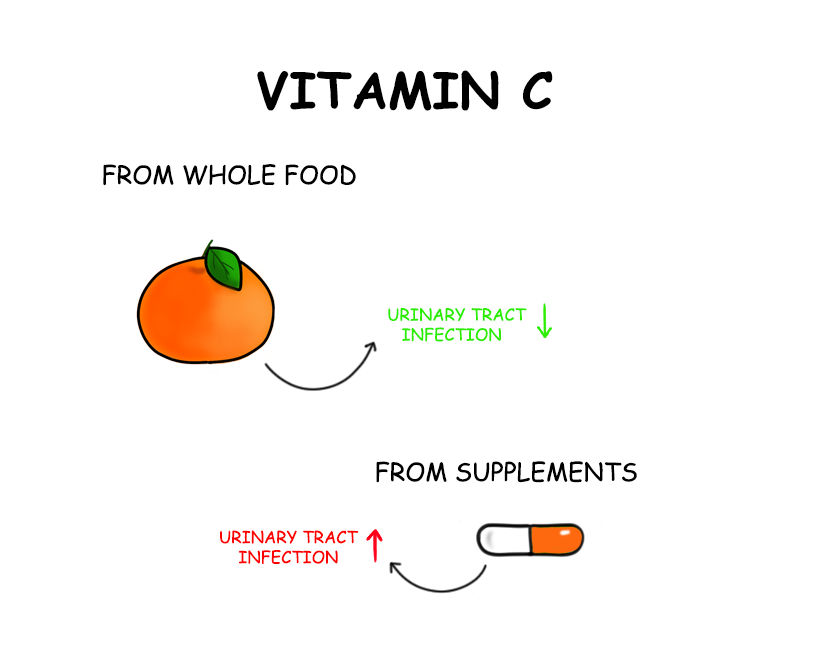
Vitamin C from oranges seems to reduce urinary tract infections, but vitamin C from supplements seems to do the exact opposite.
Vitamin C from whole food vs. supplements
At Hugg, we use only whole foods.
More than natural. We believe in real.
This is why our beverage – Kalmegh Bitters – works for multiple different conditions with near zero side effects.
No extracts.
No supplements.
No synthetics.
This is more than natural, it’s real.
Functional constipation vs. slow-transit constipation
Constipation has a lot of causes, but broadly fits into two types.
Type 1 constipation is when your body is digesting food very slowly.
This is also called slow-transit constipation.
Type 2 constipation is when digestion is normal, but you have trouble passing stool.
This is also called functional constipation.
Dirty
or Clean?
Free Analysis
This article will help you figure out which type you have, and how to address it.
Do I have functional constipation or slow-transit constipation?
There is a simple way to know whether your constipation is type 1 (slow-transit) or type 2 (functional): the corn test.
Why corn? Corn comes out the way it goes in, so it is easy to spot.
The corn test to determine whether you are type 1 or type 2
If you see corn in your poop in less than 24 hours, it means your food is moving normally through your digestive system.
If you still feel constipated, you probably have type 2 or functional constipation.
If the corn shows up later than 24 hours and you feel constipated, you likely have type 1 or slow-transit constipation.
The juice to eat without bloating
❤️ by 300+ nutritionists
Slow Transit Constipation
I have type 1 or slow-transit constipation. Why?
Type 1 constipation usually has two reasons:
The food you eat takes too long to digest
Your gut muscles are pushing food very slowly
What changes do I need to make to my diet?
Try reducing food that is high complex fat or high in fermentable sugars.
These food categories take very long to break down and slow digestion.
Here is a list of food that is high in complex fat.
Food rich in complex fat can make type 1 or slow-transit constipation worse
Here is a list of food that is high in fermentable sugar.
Food rich in fermentable sugars that make type 1 constipation worse
Fermentable sugars also create gas, making you feel bloated and making constipation worse.
Eliminating caffeine and excess sugar and smoking less are also known to help.
Do I need to add more fiber?
If you have type 1 or slow-transit constipation, we don’t recommend it.
Fiber is known to slow digestion even further.
So if you struggling with type 1 constipation, fiber may make the problem worse.
I don’t eat any of the above, but I’m still constipated.
Then it likely has do with your gut muscles.
Your gut muscles can get disturbed because of medication or stress.
Several types of medication list constipation as a side effect.
You can take a look at the extensive list, here.
Your gut muscles can get disturbed because of stress.
Under stress, the body moves blood supply away from the digestive system and into your arms and legs.
The result? Slower and erratic digestion.
The only solution to stress-induced constipation is stress relief through mindfulness practice.
Functional Constipation
I have type 2 constipation. Why?
Type 2 constipation (i.e. poor removal) usually has two reasons:
Your food is either too dry, or doesn’t have enough mass
Your pelvic muscles are damaged
What do I need to do?
Take a look at your poop.
If it is too dry, you are likely drinking too little water.
Dehydration is one of the leading causes of Type 2 or functional constipation.
Less water makes your stool dry and hard, making it difficult to pass.
In the long run, this may cause anal fissures.
If your poop seems dry and hard, start by drinking more water.
Another test: see if there is very little poop.
If yes, then you are probably eating too little or eating too refined.
If you eat too little – for example only low-calorie salads – your body has very little to remove.
If you are eating too refined – food without any fiber – your body struggles to remove it.
A fiber-supplement like isabgol will likely help in this case.
My poop seems normal, but I’m still constipated.
Then it likely has do with your pelvic muscles.
Your pelvic muscle is the main muscle responsible for removing stool from your body.
If your muscles are damaged, it becomes difficult to push.
Women often damage this muscle while giving birth, and men usually damage this muscle lifting heavy weights.
Here is a video that explains how to reverse pelvic muscle dysfunction.
Some additional exercises to strengthen your pelvic include:
Kegels
Bridge
Squats
These exercises usually take 4-6 weeks to show results.
Wanna know your Gut score? Click on the image.
3 common recommendations for type 1 and type 2
#1 Drink more water
Hard stool is surprisingly common during constipation, and water is the only real solution.
Drink more water to make your stool soft.
It almost never fails.
#2 Squat while pooping
Western toilets make bowel movement more difficult than it needs to be.
Make a small change. Place your feet on a step stool the next time you use a toilet.
Try walking 5000 steps at a stretch (not overall).
Notice the difference in how comfortably you can pass your bowels.
Exercise like walking and climbing steps really, really helps.
Make it a regular part of your routine.
You didn’t mention fiber?
Fiber is overrated for constipation.
Here’s a talk that says fiber has little to no effect for most cases of constipation.
It helps, in one category of type 2 constipation, but in several cases it can make constipation worse.
Instead, become smarter, and you won’t need anything else to fix your constipation.
The juice to eat without bloating
❤️ by 300+ nutritionists
Hyperacidity: The guide that has worked for 300+ Indians
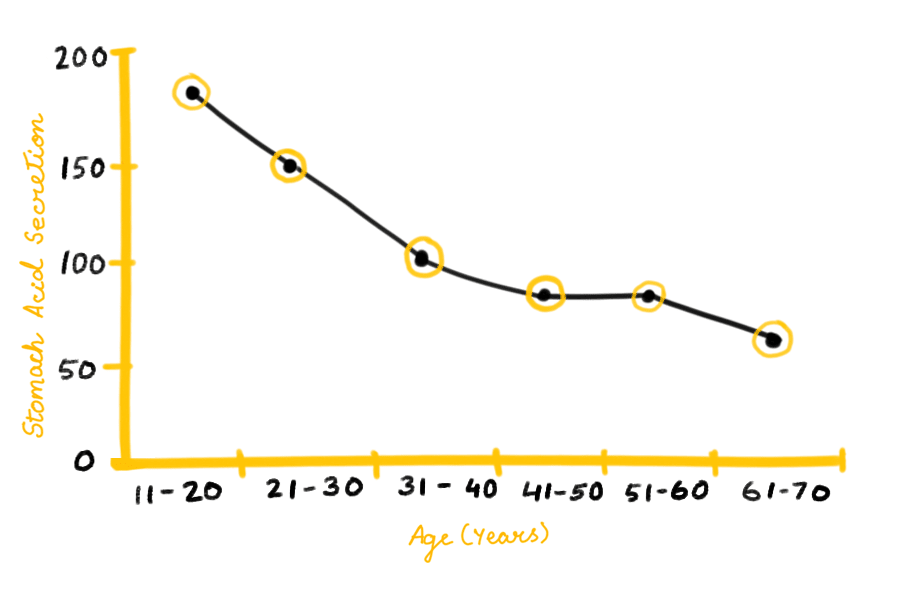
Hyperacidity is natural, and bound to happen as we age.
Take a look at the graph below.
Hyperacidity becomes very common with age
As age ☝️, acid levels 👇 and acidity problems ☝️
Just because acidity is natural does not mean it is ok.
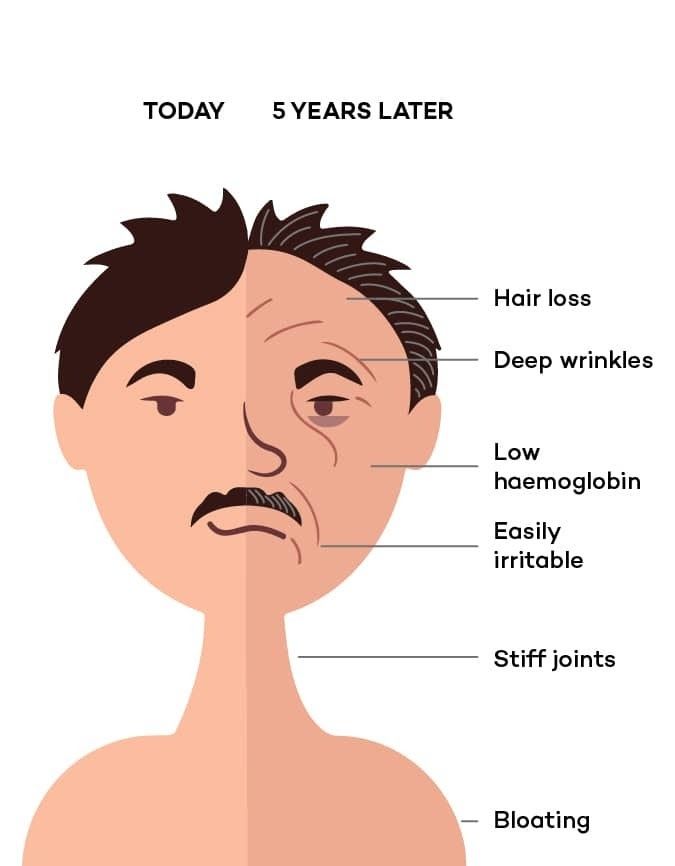
Stomach acid imbalance can change how you look and feel in a few years.
Hyperacidity changes how you look and feel
In this article, we’ll explain how can you better understand the cause of your acidity and discuss possible solutions.
Dirty
or Clean?
Free Analysis
The four causes of hyperacidity, and how to fix each one.
People suffer from acidity for different reasons.
In our experience, there are four major causes.
Each cause has a different solution.
There is a simple way to determine what is causing your acidity, and we call it the bucket approach.
Find out which bucket you are in, and you can get closer to fixing your acidity accordingly.
Bucket 1: Hyperacidity due to ‘Excess Weight’
How is belly size linked to acidity?
Research shows that excess abdomen fat can physically push your stomach upwards.
This may cause an imbalance in stomach acid production.
How belly fat affects hyperacidity
If your belly fat is the cause for your acid problems, there is only one real solution: weight loss.
Once you lose the excess fat, your stomach will fall into place and your acidity problem will slowly go away.
Most people notice a significant difference in acidity with every inch that they lose.
The juice to eat without bloating
❤️ by 300+ nutritionists
Bucket 2: Hyperacidity due to ‘Low’ Stomach Acid
Research says that low stomach acid (not high stomach acid) causes acid reflux.
Read that again^, or read this article to learn more.
There is a simple way to test if you have low stomach acid or not.
Take a little Eno or sodium bicarbonate and drink it on an empty stomach in the morning. Did you burp?
If you burped, your acid levels are probably fine.
If you did not burp, it means you have low stomach acid.
A simple way to address low stomach acid is by eating something bitter.
Bitter food increases acid production and helps balance the stomach pH.
Try something bitters for a few weeks every morning on an empty stomach.
Most people use Kalmegh Bitters or Neem Bitters as per their preference.
Bucket 3: Hyperacidity due to ‘stress / poor sleep’
Stress is a common trigger for acid reflux.
In fact, if your acidity seems to have suddenly appeared out of nowhere, and you are confident you don’t fall into buckets 1 and 2, you are most likely a part of bucket 3.
When you’re stressed your stomach muscles tighten.
Tightening of your abdominal muscles pushes acid upwards, making your lower esophageal sphincter (gate to your stomach) weak.
Stress is also known to make your pain receptors extremely sensitive.
This allows you to feel discomfort even with very little increase in acid levels.
If you feel sudden waves of acidity in a high pressure environment, you come under this bucket.
A convenient solution for bucket 3 acidity is to do the following:
Learn stress management techniques.
Indulge in physical activities
Practice deep breathing exercises
A note on sleep
Sometimes, acidity is caused by something as simple as posture.
If you are lying down, for example, it is easier for your stomach acid to travel to your food pipe.
This can cause an acid reflux.
An easy way to deal with this issue is to avoid the following:
Eating late
Eating acidic food items near bed time
Bad sleep posture
Bucket 4: Hyperacidity due to ‘Allergy’ or ‘Medicine’
Health medications and food allergies often trigger our stomach lining.
Pills like antibiotics, high BP meds, iron supplements and anti-anxiety drugs are common medication categories that you should look out for.
The four types of medicines known to make hyperacidity worse
This happens because some medication / food does not react well with your stomach, and can irritate your stomach lining.
This may cause severe acidity after you take them.
So, if you feel symptoms of acidity only after you have taken your health meds, you likely come under this bucket.
Honestly, the onlysolution for this problem is to find an appropriate replacement for your medicine.
Please consult with your physician before making any changes.
I take medicine and/or herbal churan. Is that bad?
Stomach acid is very important.
If you have less stomach acid:
Your blood would have less haemoglobin
Your skin would start to sag
Your joints would ache
You would feel moody and anxious
Your bones would be brittle
You would like be bloated all the time
Most acidity medication artificially reduces your stomach acid.
This gives you relief in the short run, but will make you age faster in the long run.
Just take a look at this graph again.
If you are a 30 year old with stomach acid levels of a 50 year old, which of the two do you think you will look like?
If I don’t use medicine, how can I get relief in the short term naturally?
Natural Alternatives to Ant Acids
Medicines are helpful, but overuse spells doom.
Luckily, there are natural, effective short term remedies for hyperacidity relief.
A few all natural solutions we recommend are:
Kokum Juice
Kokum fruit is packed with antioxidants that help to counter severe acid reflux.
Not only does this fruit have anti-inflammatory properties but it’s useful in managing gastric ulcers.
Take ½ to 1 cup of kokum juice and mix it with the same amount of water on an empty stomach.
This natural drink will slowly decrease your acidity levels.
Lime Juice
Mixing lime juice with water can show positive results on your gut health.
Lime helps stimulate the GI tract and is known to reduce heartburn.
Both are a common symptom of acidity.
Take a glass of lime juice every morning on an empty stomach and see your acidity reduce.
Alkaline Water* (On certain ocassions)
Alkaline water is linked to reducing heartburn
You know heartburn is a major symptom in patients with acidity.
A glass of alkaline water on an empty stomach is known to reduce acidity in your intestinal tract.
Go try this all natural method if you haven’t already.
(Note: alkaline water should be consumed moderately and should be avoided during lunch time)